Supported Housing Plans Curtailed Due To Government Dithering

A survey by the National Housing Federation (NHF) reveals that housing associations that provide supported accommodation have curtailed plans to build new homes because of government inaction.

This follows months of concern generated by government plans to review the funding for these services, which the sector and leading politicians believe will not work. In all, 69 housing associations – which together deliver a third of supported and sheltered homes in England – responded to the survey. Supported housing services save the taxpayer around £3.5bn in NHS costs.

To the NHF, the government’s indecision has left residents and housing associations with little certainty about their future income, leaving 71 new schemes, representing 2,185 homes, postponed

  • 19 new developments, totalling 803 homes, cancelled
  • 22 existing supported schemes and three sheltered schemes, amounting to 132 homes, facing closure.
  • Plans to build new homes down from 8,800 to 1,350 units.

The main factors for these closures and delays relate to the uncertainty about the government’s proposed funding model and the withdrawal of funding for support services. Where schemes are going ahead, two key reasons were cited; 24% estimate the local cap on housing benefits would be high enough in their area to cover their costs, followed by 18% who believe their shortfall would be offset by sufficient government funding. The five-year cumulative cost to the taxpayer of failing to make up the existing shortfall of these specialist homes is estimated at £2.72bn.

Housing associations made a strong case for an alternative model that addresses concerns about how the money will be allocated and how long it will be available for. David Orr, chief executive at the National Housing Federation, said: “These findings really bring it home: changes to supported housing funding are stopping building for the most vulnerable.”

“Housing associations know first-hand that the proposed funding model will not work – a view backed by a joint select committee – and yet government has failed to heed warnings. With social care in crisis, the role supported housing plays in alleviating pressures on the NHS is ever more important. These changes have not even come in yet and they have taken 7,000 homes for vulnerable people out of the pipeline.”

“The proposed changes in funding bear no relation to the real cost of providing this type of housing. It is time government put supported housing on a secure and sustainable footing.”

John Glenton, Riverside’s executive director of care and support, who gave evidence at Westminster on the issue, said: “Landlords like us have strong partnerships with local authorities, and are poised to begin developing much-needed additional supported housing. While this uncertainty over funding continues, a question mark hangs over development plans which would support some of society’s most vulnerable people.”

He added: “Along with other landlords, we urge the government to resolve this quickly.”
Landlords See Young People As High Risk For Rent Arrears

A study by Sheffield Hallam University, commissioned by the Residential Landlords Association (RLA), involved nearly 2,000 private landlords.

Researchers found that two-thirds of landlords are not willing to let to under-35s on Housing Benefit or Universal Credit and 44% are not willing to let to students. Amongst landlords whose lettings practice had been affected by the extension of the Shared Accommodation Rate to all under 35s in 2012, 68% had reduced or stopped letting to under-35s on benefits.

According to 24 Housing, four-fifths of landlords who continued to let to Housing Benefit or Universal Credit claimants had put in place additional safeguards, the most common being the use of guarantors or asking for direct payment to the landlord. When asked what would encourage them to increase lettings to under-35s, landlords called for a reversal of recent tax increases, providing tax relief for longer tenancies and the better administration, and direct payment to the landlord, of housing costs under welfare payments. The most popular initiative that landlords wanted to see was the introduction of bond or rent deposit schemes.

Alan Ward, chair of the RLA, said: “This research suggests that landlords are moving away from accommodating under-35s, especially those who are on benefit, out of concern that they will not get paid. The report notes that landlords are not necessarily looking for higher rents or increased yields from their properties. Instead, the emphasis is on reducing risk, particularly in relation to rent arrears and the administration of welfare payments.”

“We have already held constructive talks with the government about this and we will keep the situation under review, but there is a need for policymakers to engage further with landlords to consider what more action can be taken to address this decline. Without this many under-35s are likely to struggle to access any accommodation.”

Everton Under-23 Squad Raise Money To Buy A House For Young Homeless

In total they raised £244,400, which will be used to buy a house close to Goodison for 16 to 23-year olds at risk of homelessness in Liverpool.

Everton’s under-23 side launched a fundraising challenge last November to help a supported living initiative run by Everton in the Community (EITC). As part of the ‘Home is Where the Heart is’ campaign, the players and coaching staff took part in a sponsored sleep-out at Goodison Park on the coldest night of the year.

Helped by donations from Everton chairman, Bill Kenwright, and first-team coach, Duncan Ferguson, the U23’s target of £230,000 has been smashed. Members of a number of Everton’s supporters’ clubs also contributed to the fundraising effort, with 23 fans taking part in the Sligo to Goodison Cycle Challenge on the hottest weekend of the year in June. The fans cycled 230 miles in just 36 hours in a bid to raise £60,000 for the campaign. EITC will also offer youngsters access to key services, including health and well-being support and assistance with education and employment training.

Everton’s U23 coach David Unsworth said: “I would like to say a massive thank you to everybody from the committee, to all the fans and the U23 players who have taken part in our amazing campaign. To finally reach the target is an amazing achievement and to have done it as quickly as we have is just fabulous.”

“To be able to finish the project and help the people in Liverpool who need it most, it’s the best and most rewarding thing I’ve ever done. We’ve done something special and we will continue to help, support and fund the project.

It’s just great to be able to help people who are less fortunate than ourselves. Thank you so much to everybody who has played a part.”

Everton in the Community’s executive chair, Professor Denise Barrett-Baxendale, said: “We will not rest on our laurels now the money has been raised and will continue our search to find a house close to Goodison Park where we can offer young people who have fallen on hard times or come out of the care system, a place to stay in Liverpool before they become homeless.”

Sue Gregory from the charity said: “We have great education, employment and support programmes, but it’s hard to keep a young person engaged or motivated when they are worrying about where they’re going to stay that night, so [David Unsworth and the team] decided to give us a hand and launch this fundraising campaign.

“We’re currently looking at locations and premises. We want good quality housing with as many bedrooms as we can fit in. We need all hands on deck so if there’s anyone who can help, we need kitchens, flooring, bathrooms, specialists really who can help make it a really great, safe house for our young people.”

Although the fundraising target has now been reached, fans can still donate to the cause through the Home is Where the Heart is JustGiving page. Everton in the Community also wants to hear from people who can provide items or services that could be used for the house or for the young people, such as driving lessons or clothing for job interviews.

Housing Crisis? What About The 1.4 MILLION Empty Houses!

Government figures for ‘spare homes’ show the highest level in 20 years, with 1.4 million properties left empty for over six months.

Analysis of Government figures shows that there are more than one million additional homes above those required for households in the UK. This “housing surplus” has nearly doubled from 800,000 spare homes in 1996 to 1.4million homes at any one time in 2014. These “empty homes” are typically second homes, or vacant properties that are either left empty or are awaiting tenants or homeowners to move in.

The results show affluent areas, such as southwest London boroughs, have the most unoccupied houses. And, in a cruel twist of irony, the borough where Grenfell Tower burned – Kensington & Chelsea – has the highest number of empty homes!

Ian Mulheirn, an expert from Oxford Economics, told The Telegraph that the figures suggested that allowing developers to build more homes would not do much to bring down prices. He said prices are only likely to be lowered if and when mortgage rates began to rise.

Three factors drove house prices – the cost of mortgage debt, incomes of households and the supply of houses. Building more homes would lead to just increase the surplus of additional homes. He said: “The point is there are more dwellings than there are households.”

He said that relatively cheap access to credit combined with increased incomes for some middle class families had driven house prices upwards. Asked if this could be solved by building more homes, he said: “The answer is no. The question about are there enough houses, the evidence seem to suggest that there are. The evidence suggests that there are more surplus houses than there were 20 years ago.”

However, just last week figures were published showing that nearly a quarter of a million people are experiencing acute forms of homelessness across Britain, with rough sleeping set to rise by 76 per cent in the next decade unless the government takes long-term action to tackle the problem.

In what critics condemned as a ‘national scandal’ a total of 159,000 households are sleeping rough or living in unsuitable temporary accommodation and experiencing other forms of acute homelessness, marking a rise of nearly a third since 2011, according to Crisis.

Of these, 57,000 are ‘family’ households – consisting of 82,000 adults and 50,000 children – indicating that a growing number of families are being forced out of their housing and forced to live in unsuitable conditions.

Mark Scott, a specialist in residential property at law firm Blake Morgan, said: “Many homeowners might say that ‘a man’s home is his castle’ and the owner is free to leave their property vacant if they desire. However, there are a large number of empty properties in the UK and many would argue they could be put to better use.”

When Staying At Pontins Is No Holiday

Homeless families are being given emergency accommodation in a holiday camp as Britain’s housing crisis continues to spiral out of control.

Flintshire County Council has confirmed it is using Pontins Holiday Camp in Prestatyn, North Wales, to house families as pressure grows the housing waiting list. The number of people waiting for a council home Flintshire has grown by a third since September, with officials saying the homelessness service is at “breaking point”.

Clare Budden, the council’s community and enterprise chief officer, said: “There are currently just over 1,600 people on Flintshire County Council’s waiting list for housing. This compares with just over 1,200 at the end of September, demonstrating the growing need for social housing in the area.“

Ms. Budden added: ”The council occasionally uses Pontins at Prestatyn for short stays to accommodate people in need of emergency accommodation – say after a fire or where rented accommodation is deemed unsuitable for health and safety. The accommodation at Pontins provides larger families and people with specific needs access to their own cooking facilities.”

The number of families affected by homelessness is expected to more than double in the next two decades, with 200,000 households affected by 2041, according to recent research commissioned by homelessness charity Crisis. Earlier this month it emerged a family of nine were living in a five-man tent in a back garden in Hull after being evicted from their home.

Flintshire County Council says it is looking to build 500 new council houses. Bernie Attridge, the council’s deputy leader, told the Daily Post: “The homeless service is at breaking point, but we pride ourselves that we will not see anybody rough sleeping and will find somewhere for them to stay. Pontin’s is only used to put larger families up in an emergency where bed and breakfast would not be appropriate and when they need cooking facilities.“

Housing charity Shelter Cymru says housing people at Pontins shows more homes are needed to tackle the housing crisis. A spokeswoman said: “Shelter Cymru welcome the fact that the council is being innovative and thinking outside the box, but this situation shows the extent of the problem not just in Flintshire but across Wales regarding emergency accommodation.”

“The only realistic answer to this crisis is to build more affordable homes to meet the needs of those at risk of homelessness,” she added.

Homelessness Will Increase In The Coming Years, Study Predicts

Britain’s homelessness crisis is predicted to skyrocket, say researchers, with rough sleeping across the UK to jump by more than three quarters (76%) over the next decade,

A new report from Crisis says that around 9,100 people were sleeping rough in 2016, with the number expected to rise to 16,000 in 2026. In 2016, 159,900 households, estimated at almost a quarter of a million people (236,000), were experiencing some form of homelessness, research carried out for Crisis by Heriot-Watt University found.

If nothing is done soon, the most acute forms of homelessness are likely to keep going up, with overall numbers forecast to rise by more than a quarter (26.5%) over the next 10 years to 202,200 in 2026, says the report. The scale of homelessness had ‘increased significantly’ (33%) across Britain in the last five years, up from 119,900 in 2011. The report states: “If current policies continue unchanged, the most acute forms of homelessness are likely to keep rising, with overall numbers estimated to rise by more than a quarter in the coming decade and two and a half times by 2041.”

Last year 68,300 households were sofa surfing, 19,300 households were living in unsuitable temporary accommodation and 37,200 households were living in hostels. Around 26,000 households were living in other circumstances in 2016, including 8,900 households sleeping in tents, cars or on public transport, 12,100 households living in squats and 5,000 households in women’s refuges or winter night shelters, it said. Households in unsuitable temporary accommodation are set to almost double, increasing 93% to 37,300 by 2026, the report added.

John Sparkes, chief executive of Crisis, said: “Crisis still exists because homelessness still exists, and today’s report makes it only too clear that unless we take action as a society, the problem is only going to get worse with every year that passes. That means more people sleeping on our streets, in doorways or bus shelters, on the sofas of friends or family, or getting by in hostels and B&Bs. In order to tackle this, we need to first understand the scale of the problem.”

Although he welcomed the Government’s pledge to tackle rough sleeping, he also urged “action and long term planning to end homelessness for good.” The report argues that a 60% increase in new housing could reduce levels of homelessness by 19% by 2036.

A Department for Communities and Local Government spokesman said: “This Government is determined to help the most vulnerable in society and we’re working to make sure people always have a roof over their head. We know this is an issue Government can’t solve alone and so welcome Crisis’s support for our commitment to tackle homelessness and rough sleeping. Alongside investing £550 million to 2020 to address the issue, we’re implementing the Homelessness Reduction Act, which will require councils to provide early support to people at risk of becoming homeless. There’s more to do and ministers will set out plans shortly.”

Judith Blake, the Local Government Association’s housing spokeswoman, raised the importance of council house building in tackling the issue. She said: “Councils want to end homelessness. As we have warned, councils are housing the equivalent of an extra secondary school’s worth of homeless children every month. For families, rising homelessness is tragic. For councils housing homeless people, it is unsustainable. Homelessness is everyone’s business, and councils need the help of health, employment and housing partners to deliver ambitions to end it.”

“In particular, councils need to be able to adapt the implementation of some welfare reforms to ensure there are housing options for people on low incomes. There is no substitute for a renaissance in council house building if we’re to truly address the rising homelessness we face as a nation. For that to happen, Government needs to allow councils to borrow to invest in genuinely affordable housing and to keep all of their receipts from Right to Buy sales, so that money can be reinvested into delivering genuinely affordable homes.”

Shadow housing secretary John Healey said: “It is a national scandal that in 21st-century Britain the number of people experiencing homelessness is spiralling upwards. These new figures are a terrible reminder of the consequences of Conservative ministers’ seven years of failure on housing. The number of people sleeping rough fell under Labour but has risen every year under the Conservatives and has now doubled since 2010.”

“This is a direct result of decisions made by Conservative ministers: a steep drop in investment for affordable homes, crude cuts to housing benefit, reduced funding for homelessness services, and a refusal to help private renters.”

The report can be downloaded here: https://www.crisis.org.uk/ending-homelessness/homelessness-knowledge-hub/types-of-homelessness/homelessness-projections-core-homelessness-in-great-britain-2017/

Good Samaritan Helps Homeless Mum

A young mum was brought to tears after being given a new home by a millionaire who was, himself, homeless as a child.

Marco Robinson, 49, a property developer now worth £25m, bought 18 year-old Holly a three-bedroom flat in Preston, Lancashire, after she showed him the mould-covered flat she shared with her baby.

According to a report in The Independent, the businessman met with three groups of people – Jo, a woman losing her eyesight, a family of Syrian refugees, and Holly and her daughter Bethany – who were all in need of a home and were appearing on Channel 4’s Get a House for Free.

Mr Robinson eventually chose the young mother, telling her that the flat was being transferred into her name, because he didn’t want her baby to grow up with the same experiences he had suffered from as a child. Mr Robinson said he had grown up in difficult circumstances, sleeping on park benches with his own mother at times. As a result, he said he had always wanted to give someone the gift of somewhere to live.

Eight thousand people applied to move into the free flat as part of the television programme. Runner-up Jo was given a deposit to help her buy her own home, and Mr Robinson gave the Syrian refugee family accommodation to live in while they waited to be granted asylum.

Delivering the news to Holly, Mr Robinson said: “I want you and Bethany to have a solid place to live – a home. I want you to get out there and better yourself. You’ll be able to go to college.”

Bursting into tears, Holly said: “You’re going to change my life. There’s no words for this. I’m so happy not just for my sake but for Bethany so I can give her a future I can give her stability.”

Liverpool In A Bind Over Homeless Asylum Seekers

Liverpool City Council has revealed that we have a major problem with asylum seekers who travel to the city and have their final appeal hearing rejected – and potentially end up living on the city’s streets. And town hall bosses say the problem is made far worse by the fact that they could be actually be punished for attempting to help and house such people, although this is something the government refutes.

Cllr Paul Brant, Liverpool City Council’s cabinet member for health and social care, told the Liverpool Echo: “Liverpool is one of the few destinations where we process the final appeals for asylum claims and where people have been rejected it means they are then classified as having no recourse to public funds. The position of the local authority is that if they are then rough sleeping because they have no income, we are banned from helping them.”

He suggested that the council could be fined up to £3,000 for helping them using public funds. But this is something the government has denied, arguing that it would never fine councils for helping people on the streets.

However, Section 115 of the Immigration and Asylum Act 1999 states that a person will have ‘no recourse to public funds’ if they are subject to immigration control – which would include those who have failed their asylum bids in Liverpool. In this case, public funds include things like income-based jobseeker’s allowance, income support, child tax credit, universal credit, working tax credit, housing benefit and crucially local authority homelessness assistance or local authority housing. This is the part that Cllr Brant says puts Liverpool City Council in an almost impossible situation. He said: “It seems crazy, partly because its a very visible problem – the people of the city want us to give some kind of support to make sure that people are not rough sleeping.”

Addressing the government directly, he said: “In cities like Liverpool, where we have a large number of people who have their final appeals for asylum dealt with – you’ve got to relax the rules on how we can treat those people. You need to give us additional support and finances so that we can deal with them, or deal with them yourselves – because this is a national government problem. Don’t just dump the problem here in Liverpool and leave us to pick up the pieces – but ban us from dealing with the problem.”

Responding to Cllr Brant’s comments, a Home Office spokesman said the country has a “proud history of providing protection to those who need it and further submissions on protection grounds lodged by failed asylum seekers are carefully considered on their merits, in accordance with our international obligations.”

He added: “Failed asylum seekers must lodge further submissions in person in Liverpool unless there are exceptional circumstances. These submissions are considered as quickly as possible to ensure that money is not spent on those who lodge unfounded claims to secure accommodation and to delay removal.”

Streetlink – A New Online Service To Help Rough Sleepers

There seems to be an app for everything these days – there’s even one now that can help rough sleepers to find a bed for the night!

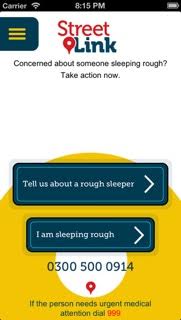
Streetlink is a new online service that enables the public to alert local authorities in England and Wales about people sleeping rough in their area. The website provides the public with a means to act when they see someone sleeping rough, and is the first step someone can take to ensure rough sleepers are connected to the local services and support available to them.

The service was developed by Homeless Link with funds from the Government as part of its commitment to end rough sleeping. Now they have launched a companion app that allows members of the public to alert the authorities to people sleeping rough so that they can be offered helping services.

Russell Webster, who runs an online blog about drugs and crime, says: “The app is basic but works well. The initial bugs seem to have been resolved (judging by user comments on iTunes and Google Play) and the app works best when you set up a profile and enter basic minimum details about yourself (name, email and phone number if you like).”

“If you then spot a rough sleeper you are concerned about, you simply let your phone set your location and provide basic information about exactly where you saw them (on a bench, in a car park etc.) and whether you have seen the person frequently.”

“The app also gives advice on how to get help for a rough sleeper. Additionally, it provides you with information about the number of rough sleepers by local authority and keeps a record of any reports you make. This is a very basic app but does exactly what it says on the tin and is probably invaluable for volunteers helping out with a soup kitchen or other provision for people sleeping rough.”

You can download the IOS app here https://itunes.apple.com/gb/app/streetlink/id587543230?mt=8&ign-mpt=uo%3D4 or the Android version here https://play.google.com/store/apps/details?id=co.uk.precedent.streetlink

Russell Webster’s blog is well worth a look, at www.russellwebster.com

Young Scots Face A Bleak Future In Housing Crisis

Increasing numbers of Scottish people are being made homeless amid a housing crisis fuelled by crippling Tory welfare cuts – and half those who feared losing their home or finding themselves on the streets are aged 16 to 34.

According to research by the homeless charity Shelter, figures show a higher proportion of young people bearing the brunt of the housing problem, which is reflected in a surge of applications to Shelter for help in the past year, when 21,000 Scots needed advice on keeping a roof over their heads. Scotland’s renters also reported an alarming range of problems relating to housing costs, conditions and issues with landlords – resulting in 825,000 unique visits to Shelter’s online advice service.

Alison Watson, Shelter’s deputy director, told the Daily Record: “This report shows the disproportionate impact of Scotland’s housing crisis on young people and private renters, who are both ­over-represented in the number of people we helped. The terrible shortage of truly affordable homes, harsh welfare reforms, stagnant wages, and the high cost of keeping a roof over their head are the main reasons driving people to ask for help.”

“The statistics speak for themselves – on average, a household in Scotland becomes homeless every 19 minutes. Unknown numbers are sofa surfing with friends and family as they don’t have, or cannot afford, a home of their own. We were contacted by more than 1,000 households who were already homeless. Behind those statistics are people, families, individuals – people on low incomes, people with complex needs, people in crisis – some of the most vulnerable people in our society.”

Research at the time suggested the number of rough sleepers could be more than double the government figures. The Glasgow Homelessness Network estimated that, from their observations, up to 800 people regularly sleep rough. The analysis found most are men, who often have mental health problems and drug and alcohol ­dependencies. Researchers found these issues were usually brought on by “traumatic ­childhood experiences”, such as abuse. The crisis in Glasgow came despite the council taking ­responsibility for finding ­accommodation for homeless people since a law change in 2012.

Labour housing spokeswoman, Pauline McNeill, MSP, called for the SNP to take housing seriously. She said: “This report shows that young people are bearing the brunt of the housing crisis, with many trapped in a vicious cycle. Thousands of young people can’t afford the deposit for a home and don’t have access to social housing so are forced to rent privately – but the rent is so high, many can never save enough.”

“Labour have been putting pressure on the SNP Government for months to take the housing crisis seriously. That means building more homes with a national ­house building strategy, creating jobs and cutting poverty levels – but also reforming the private rented sector. Ensuring everyone has access to a warm, safe home they can afford will have a huge effect on building a fairer Scotland.”

But SNP Housing Minister, Kevin Stewart, refuted this, saying: “We have ­delivered 60,000 affordable homes in our time in office, reintroduced council housing, ended right to buy, and are supporting people into home ownership. In ­addition, we are building at a rate faster than anywhere else in the UK, and we have built 41,000 more homes than would have been built at England’s slower per-capita rate. That’s the equivalent of a new town the size of Paisley. We are on track to deliver even more houses in this ­parliamentary term with our commitment to deliver at least 50,000 affordable homes – including 35,000 social homes, backed by over £3billion investment.”