Homeless Football Teams Play Before European Champions Final – As Homeless Are Cleared From The Streets Of Cardiff

Homeless people played football on the same pitch as some of the world’s greatest ever players last Thursday. The match on Cardiff Bay’s floating pitch was one of the events ahead of Saturday’s Champions League final.

“It’s absolutely huge,” Keri Harris of Street Football Wales told the BBC. “It will be the same field, arena, where the day after a group of legends are going to be on the same pitch. It will help show homeless people are like everyone else, we are all just one step away. Being on the same pitch as famous footballers will help show they are human.”

Twenty players took part, before being whittled down to 16 for the Homeless World Cup in Oslo later this year. Wales will take men’s and women’s teams to the contest after £10,000 of Welsh Government funding.

The Homeless World Cup first took place in Austria in 2003, as a way of inspiring homeless people to transform their futures. About 50 voluntary groups and charities from around Wales then came together to create their own street football programme.

Teams include over-16s, with some that have become socially excluded through things like substance misuse, mental health or cultural issues, and suffered homelessness in the past year. Others had been long-term unemployed or spent time in jail and faced stigma and barriers to being part of society.

Ahead of Thursday’s demonstration match, Mr Harris said that street football has made a “life changing difference” to hundreds of homeless people and the prospect of playing in the world cup has inspired them.

Actor Michael Sheen is a patron, while minister for social services and public health Rebecca Evans said: “I met Street Football Wales recently and saw the difference their projects can make to people’s lives, not only in regards to health and wellbeing, but also in terms of self-confidence and personal development.”

Ironically, homeless people have reportedly been ordered out of Cardiff city centre ahead of the Champions League final. Several people living on the streets of Cardiff said police officers had told them to leave the city or potentially face arrest before the clash between Juventus and Real Madrid on Saturday.

South Wales Police said anyone behaving antisocially or causing harassment to others could be asked to leave the area for up to 48-hours under dispersal powers.

Officers could tell people to leave a certain area under Section 35 of the Anti-Social Behaviour, Crime and Policing Act 2014. The section allows police to order people to leave a certain area for no more than 48 hours to stop any antisocial behaviour or crime. Failure to comply is a criminal offence and doing so could see people landed with a fine or imprisonment of up to three months, according to the Crown Prosecution Service.

Homeless Vicky Berry, 29, from Pontypridd, told the Daily Mirror: “I’ve been told that I have to move on, and that we have to go for four days and we are not allowed in. I do understand that with everything going on there is a security problem, but chucking homeless people out isn’t the right thing to do.”

“I haven’t got a clue what I’m going to do.”
So, How Many People Are Homeless In England? It’s Complicated!

As of autumn 2016, there were an estimated 4,134 people a night sleeping rough on England’s streets, more than double the number in 2010 and a 16% increase on the year before.

These are estimates based on local authorities either conducting a street count on a single night or making an estimation based on intelligence gathered from local services. So, with only a few days to go before the general election, what are the major political parties saying about homelessness?

According to the BBC website:

  • Labour has pledged to end rough sleeping within its first term in government by making 4,000 additional homes available for people with a history of being on the streets.
  • The Conservatives pledge to halve rough sleeping over the course of the next parliament and eliminate it by 2027 by establishing a homelessness reduction taskforce.
  • The Liberal Democrats have pledged to end “the scandal” of rough sleeping, in their general election manifesto – but don’t say how.
  • The Green Party say they would give local authorities the same duties towards single people and childless couples as to families, while UKIP don’t have a specific policy on homelessness, but say they will take measures to address homelessness among veterans.

Although homelessness is often associated with images of people sleeping on the streets, in reality rough sleepers make up a small proportion of the total homeless population. In 2016, local authorities in England accepted 59,260 households as being statutorily homeless and agreed to house them.

This means councils had decided those people or families did not have somewhere to live that they had a legal right to occupy, which is accessible and physically available to them and which it would be reasonable for them to continue to live in.  It’s hard to say how much this figure overlaps with the number of rough sleepers recorded.

There is a large group of people who don’t have a place to live but who are not considered vulnerable enough in legal terms to qualify for housing.

Single adults with no children who don’t have any of the specific additional vulnerabilities listed below will generally not be entitled to housing if they become homeless.

Councils consider the following groups to be in priority need:

  • Households with dependent children
  • Pregnant women
  • People who are vulnerable in some other way, for example, because of mental illness or physical disability.
  • Teenagers aged 16 or 17
  • Those aged age up to 20 who have previously been in care
  • People who were vulnerable as a result of time spent in care, custody or the armed forces
  • People who have had to flee their home due to violence or the threat of violence.

In 2016, 116,200 households in England applied to their councils for housing assistance because they said they were homeless.  Of those, there were almost 30,000 English households that councils agreed were homeless but said they did not have a duty to provide them with housing.  Numbers of households accepted as homeless and eligible for housing assistance had been falling sharply from the early 2000s until the end of 2009. Since then, they have been gradually rising.

To find out more, go to http://www.bbc.co.uk/news/uk-politics-39745253

Homeless Heroes Of Terror Attack

Two homeless men have been hailed as heroes after they rushed to help those caught up in the horrific terror attack at the Ariana Grande concert in Manchester.

Chris Parker, 33, cradled a dying woman and wrapped a bloodied child in merchandise T-shirts while Stephen Jones described in harrowing detail how he had to pull nails from a little girl’s face.

Chris was in the foyer of the arena – where he regularly goes to beg for money as the crowd leave – when the bomb went off. He said he was knocked to the floor by the blast but immediately got back up and began trying to help the wounded.

He said: “Everyone was piling out, all happy and everything else. As people were coming out of the glass doors I heard a bang and within a split second I saw a white flash, then smoke and then I heard screaming. It knocked me to the floor and then I got up and instead of running away my gut instinct was to run back and try and help. There was people lying on the floor everywhere. I saw a little girl … she had no legs. I wrapped her in one of the merchandise T-shirts and I said ‘where is your mum and daddy?’ She said ‘my dad is at work, my mum is up there’.”

Rough sleeper Steve also rushed to help young victims following the explosion at the Manchester Arena. He told ITV News: “Just because I am homeless, it doesn’t mean that I haven’t got a heart and I’m not human still. They needed the help, I’d like to think that someone would come and help me if I needed help. It’s just instinct to go and help … it was a lot of children with blood all over them, crying and screaming.”

He added: “We [had] to pull nails out of their arms and a couple out of this little girl’s face. It had to be done, you had to help. If I didn’t help I wouldn’t be able to live with myself for walking away and leaving kids like that.”

David Sullivan, the owner of West Ham football club, was so moved by Steve’s actions that he has stepped in to help him. Mr Sullivan told BBC Radio 5 Live he wants to help the ‘hero’ by paying for his accommodation for six months and some money to help him turn his life around.

“It looks like he needs some help, so we are desperate to find who he is and give him six months free accommodation and a little bit of money to help him on his way,” he said.

General Election June 8th – So What Will Our New Government Do To Tackle Homelessness

You may have noticed that there’s a General Election coming up soon, but what have the major parties promised to do about homelessness?

Those nice people at Homeless Link have produced a summary of the manifesto commitments of the three major parties – Conservative, Labour and the Liberal Democrats – in policy areas relevant to our service users. We have outlined the commitments to homelessness and housing below, but this does not cover all the policies the parties have put forward. For more details, go to www.homeless.org.uk

Conservatives

Homelessness and housing

  • Fully implement the Homelessness Reduction Act
  • Aim to halve rough sleeping over the course of the parliament and eliminate it altogether by 2027
  • Set up a new homelessness reduction taskforce that will focus on prevention and affordable housing
  • Pilot a Housing First approach to tackle rough sleeping
  • We will also improve protections for those who rent, including by looking at how we increase security for good tenants and encouraging landlords to offer longer tenancies as standard
  • Meet the 2015 commitment to deliver a million homes by the end of 2020 and deliver half a million more by the end of 2022
  • Give greater flexibility to housing associations to increase their housing stock

Labour

Homelessness and housing

  • A new national plan to end rough sleeping within the next Parliament and 4,000 additional homes reserved for people with a history of rough sleeping
  • Safeguard homeless hostels and other supported housing from changes to Housing Benefit
  • Build at least 100,000 council and housing association homes a year for genuinely affordable rent or sale by the end of the next Parliament
  • Establish a Department for Housing, overhaul the Homes and Communities Agency and give councils new powers to build the homes local communities need
  • Three-year tenancies the norm, with an inflation cap on rent rises
  • Ban letting agency fees for tenants and give renters new consumer rights
  • New legal minimum standards to ensure properties are ‘fit for human habitation’ and empower tenants to take action if their rented homes are sub-standard
  • Reverse ban on long-term council tenancies to give council tenants security in their homes

Liberal Democrats

Housing and homelessness

  • Increase support for homelessness prevention and fund age-appropriate emergency accommodation and supported housing
  • All local authorities to have at least one provider of the Housing First model of provision
  • Housebuilding target of 300,000 homes a year, ensuring half a million affordable, energy-efficient homes by the end of the parliament
  • Ban lettings fees for tenants, cap upfront deposits and increase minimum standards in rented homes
  • Establishing a new Help to Rent scheme to provide government-backed tenancy deposit loans for all first-time renters under 30
  • Promote longer tenancies of three years or more with an inflation-linked annual rent increase built in, to give tenants security and limit rent hikes.
  • Improve protections against rogue landlords through mandatory licensing and allow access for tenants to the database of rogue landlords and property agents
  • Promote tenant management in social housing

There is loads more information on their website, so go to www.homeless.org.uk

Homeless Link is the national membership charity for organisations working directly with people who become homeless or live with multiple and complex support needs. We work to improve services and campaign for policy change that will help end homelessness.

Refugees are being left homeless say MPs

Once granted refugee status asylum seekers have just 28 days to leave their Home Office accommodation, according to a new report. This leaves many to rely on charity as they try to integrate into British society. The report also highlights a two-tier system between refugees who journey across Europe to get here, and those the Government brings to Britain.

The All Party Parliamentary Group (APPG) on Refugees report calls on the Government to double the length of time asylum seekers can remain in their accommodation before they are kicked out. The report also calls for more money for English language lessons, which more than halved between 2008 and 2015. It recommends the creation of a new National Refugee Integration Strategy and a ministerial post dedicated to resettling refugees.

For example, Syrian families who are brought to Britain under the Home Office’s Vulnerable Persons Resettlement Scheme (VPRS) receive housing and support for 12 months. But refugees who make their own way here and apply for asylum in the UK face a sudden stop in financial support just after they win the right to stay here. There are also delays in processing their paperwork, and minimal English language education and help to find employment and homes. The APPG report cited one refugee from Syria who spent months homeless and jobless because of a spelling mistake in his paperwork

Under the last Labour government, a programme called the Refugee Integration and Employment Service was set up that offered 12 months of support to access housing, education, social security and the job market. However, this was shut down by the Tory/Lib Dem coalition in September 2011. Since then, there has been no official support service for refugees who have been through the asylum system.

Labour MP Thangam Debbonaire, who chairs the APPG, said: “Creating a two-tier system for refugees, loading the dice against people who come here to build a new life is not just the wrong thing to do but a costly missed opportunity for Britain. Refugees bring so many talents and skills. They just need the opportunities to unlock their potential.”

Stephen Hale, chief executive of Refugee Action, said: “This report is a timely wake-up call. The new Government must seize the opportunity to enable all refugees in Britain, regardless of how they arrive, to successfully rebuild their lives. Refugees are determined to learn English and start contributing to their new communities through volunteering, work and socialising with their neighbours. But as the report highlights, they face huge barriers to integration. This is a shocking waste of their talents.”

Manchester Metro Mayor To End Homelessness “By 2020”

Greater Manchester’s newly elected Mayor, Andy Burnham, is teaming up with national homeless charity Crisis to make homelessness a priority.

Mr. Burnham, who took 63% of the vote for an emphatic win in last week’s election, promised to set up a new “Homelessness Action Network” to initiate a range of community groups toward ending homelessness by 2020. Figures from campaigners suggest as many as 3,292 people are surviving without a home across Greater Manchester, while Manchester itself has the highest figures of homelessness in the North West. It is estimated that 2,000 people are living on the streets or in temporary accommodation.

Jon Sparkes, Chief Executive of Crisis, said: “The number of people forced to sleep rough in Greater Manchester and across the country continues to rise and, for many, the consequences are devastating. But we know there are solutions, and so we welcome the new Mayor of Greater Manchester’s commitment to end rough sleeping across the city region by 2020, and the Greater Manchester Mayor’s Homelessness Fund, which Crisis has been chosen to help set up.”

“For 50 years, we have been helping people leave homelessness behind for good, and we will use all that knowledge and experience to help ensure money donated to the fund is used as effectively as possible to put an end to rough sleeping in Greater Manchester once and for all.”

The Greater Manchester Mayor’s Homelessness Fund will operate as a Community Foundation, an independent charity that will disseminate funds to local organisations through a grant process. In the interim period, while the Community Foundation is being set up, the fund will be available on a GoFundMe facilitated by Crisis and transferred in full to the Mayor’s Homelessness Fund on completion of the process.

Mr. Burnham also wants the Greater Manchester Housing Fund “refocused” on the building of affordable homes. He said: “We will seek to renegotiate the terms of the fund so that it can be used to help councils and housing associations build more council homes and social housing.”

He continued: “We will work with housing providers to establish a new GM-wide Rent-to-Own scheme that will be particularly focused on people under-30 to help them on to the housing ladder. We will focus Rent-to-Own schemes on our town centres to revitalise them.” He also said private landlords will have a voluntary registration scheme to help drive up standards.

It is not yet known whether his counterpart for the Liverpool region, Steve Rotheram, will be taking a similar line to tackle the problem of homelessness.

Deadly Drugs Warning

There have been a rising number of deaths in Europe and America linked to the use of two opioid drugs – fentanyl and carfentanil – that are reportedly being mixed into heroin.

Now, both fentanyl and carfentanil appear to have arrived in the UK – several people in the northeast of England have died in the past month after using heroin cut with fentanyl and/or carfentanil.

Fentanyl and carfentanil are highly potent, rapidly acting opioid drugs. Fentanyl is 100 times more potent than morphine, while carfentanil is 10,000 times more potent than morphine. In comparison, heroin is 4-5 times more potent than morphine.

Some dealers in the UK seem to be cutting heroin with fentanyl or carfentanil, thereby increasing the strength of their product. A small dose of carfentanil is commonly used legally as a sedative for elephants, bears, and other large mammals.

Taking precautions

It is impossible to tell by sight whether heroin has been cut with fentanyl or carfentanil, but there are some precautions that can be taken to reduce the potential for overdose. However – both fentanyl and carfentanil are potent at such low doses that there is a significant risk of death if those drugs are being consumed, even if harm reduction steps are taken.

The following advice should be passed on to people who use heroin, to reduce the risk of harm from consuming fentanyl/carfentanil:

  • Do not use alone; make sure that someone you trust is present, and equipped with naloxone.
  • Make sure there is sufficient naloxone available. You will need more naloxone to recover from an overdose of fentanyl/carfentanil that you would need for a heroin overdose.
  • Smoke a small amount on foil before attempting to use intravenously. You are very unlikely to die from smoking fentanyl/carfentanil-laced heroin as you would fall unconscious before inhaling the lethal dose.
    • This does not apply if you have already consumed depressants, such as alcohol or benzodiazepines.
  • Like injecting, snorting fentanyl/carfentanil-laced heroin can be potentially fatal
  • If injecting, start with a dose that is one-quarter of what you usually use.
    • Don’t “slam” your hit. Depress the plunger slowly, pausing to allow the familiar dose to take effect. If you feel it is unusually strong or sedating, pull it out.
  • Be aware of the signs of overdose:
    • Sudden disorientation, including nodding into unconsciousness
    • Losing muscle control (particularly in the knees or neck)
    • Cyanosis (skin turning blue)
    • Falling unconscious before removing the needle
  • Being aware of these overdose signs can help you look after someone who is using heroin, and can help them look after you if you overdose – this is why it’s important to not use alone.
  • Also, follow the local news to see if there are reported fentanyl/carfentanil overdoses or deaths in your area.

Help The Homeless To Vote In The Upcoming Elections

With low levels of voter registration among people who are homeless, and a deadline of 22nd May to register for the General Election, can homelessness services increase democratic engagement in time to make a difference?

Homeless Link has produced a really useful guide for helping the homeless to register to vote in the upcoming elections. You can find it here http://www.homeless.org.uk/connect/blogs/2017/apr/25/homeless-not-voteless

The Homeless Link guide gives six key lessons gleaned from their 2015 ‘Your Vote Matters’ project:

  1. You don’t need an address to register
    People who are sleeping rough, or otherwise without an address, can complete a form called ‘Register to vote: No fixed or permanent address’. Find them here for each country.
  1. People worry about how their information will be used
    There’s a common perception that registering to vote means personal information will be shared and lead to problems, like being chased for old debts. Homeless Link’s factsheet explains how data is used, and how to stay off the open/edited register. People with safety concerns can apply to be registered anonymously (evidence is needed).
  1. It’s a good idea to invite politicians to homelessness services
    Homeless Link were impressed by how many candidates visited homelessness services during Your Vote Matters in 2015, even when there was a short lead-in time. Feedback from these visits was excellent, with conversations or Q&A increasing engagement and understanding on both sides.
  1. Share information about policy platforms
    People often ask for unbiased resources to help them compare party policies. Look out for tools and summaries once the manifestos are published. You never know how people will vote – keep activities party-neutral.
  1. Offer 1-1 support, involve peers, and make links to wider client involvement work
    Registering to vote online is quick, but having people on-hand to explain things like the open register will make it easier for someone to complete the process with confidence. Involve peer mentors or resident representatives, and make links between democratic engagement activities and opportunities for decision-making in your service.
  1. Be prepared with positive messages
    You will encounter resistance and ambivalence about political engagement. Speak to people in your service who are already registered to vote and find out why it matters to them, and use Homeless Link’s Dealing with Disengagement factsheet to prepare your key messages. They found that “being registered to vote improves your credit rating” was the most effective message for action, especially when coupled with immediate access to online registration. Even if people choose not to register this time, they will be better informed ahead of future elections.

As well as the Your Vote Matters resource pack, the Cabinet Office funded a range of accessible materials for under-represented groups, collected here: www.gov.uk/government/collections/democratic-engagement-resources

Bad News For Bosco Bees

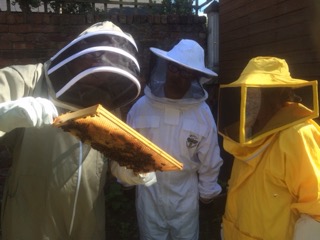
The bees looked fine on inspection last year

Last November the Bosco bee colony was put to bed for the winter with enough food to see them through the cold months and an extra layer of insulation around the hive. But the season has ended in disaster as the first inspection of 2017 has revealed that the bee colony has been devastated – they had all, sadly, died over the winter.

The reason why the whole colony should die at once is unclear, but it is known as a ‘colony collapse disorder’ or CCD. Scientists reckon CCD might be caused by a combination of factors interacting with one another, including exposure to agricultural pesticides and attacks by bee parasites such as varroa mites.

Bosco volunteer, Linda Van Nooijen, said: “We don’t know whether our bees have been exposed to pesticides, but they were checked for varroa before winter and got a clean bill of health. Our local bee expert, Andrea Ku, thinks it might be down to the weather, as we didn’t have a particularly cold season and they may have woken up too early.”

However, some research suggests the suddenness of a colony’s collapse could to be related to a change in foraging behaviour whereby younger worker bees leave the hive in search of food rather than gaining more experience in the safety of the nest. Clint Perry, a researcher at Queen Mary University, London, said: “Young bees leaving the hive early is likely to be an adaptive behaviour to a reduction in the number of older foraging bees. But if the increased death rate continues for too long or the hive isn’t big enough to withstand it in the short term, this natural response could upset the societal balance of the colony and have catastrophic consequences.”

“Precocious foragers completed far fewer foraging trips in their life, and had a higher risk of death in their first flights. This resulted in a breakdown in division of labour and loss of the adult population, leaving only brood, food and a few adults in the hive,” said researchers. A mathematical model found that as more workers started foraging at an earlier age, the effect had a positive feedback, with the change in behaviour causing more and more young workers to leave the hive, the researchers said.

Colony collapse disorder has caused a 30 per cent average annual loss of honeybees in North America alone over the last decade. A key feature of the disorder is the complete disappearance of worker bees, leaving the hive largely empty of adult bees. “Our results suggest that tracking when bees begin to forage may be a good indicate of the overall health of a hive. Our work sheds light on the reasons behind colony collapse and could help in the search for ways of preventing colony collapse,” Dr Perry said.

But all is not lost. Linda said: “The hive will be thoroughly cleaned and a new colony will be in residence within the month. We go again!”

Free Beer Handed To The Homeless Of Liverpool

A promotional campaign to advertise Budweiser beer has divided opinion as free cans were handed out to the public, including homeless people, in Liverpool city centre.

Last Wednesday afternoon a ‘Bud Light’ promotions van parked in Whitechapel and staff began handing out cans of lager to passers-by. The vehicle was told to move by council staff because it did not have permission to be there. But a reporter from the Liverpool Echo found several rough sleepers in the area had also been given free beer as part of the promotion.

One rough sleeper told the reporter he had been given quite a few cans and had handed some of these out to his friends. He said: “They were just handing them out to everyone, I ended up with a trolley full. I think it was sound. I think its ok giving those out, it doesn’t do any harm does it.”

But city centre councillor, Nick Small, was outraged at the stunt. He said: “They have done this without permission from the council’s Licensing Team or City Centre Team. I’ve had reports from members of the public that they’ve seen street drinkers and other vulnerable residents being handed free cans of beer by Bud Light.”

“I’m outraged that this is happening when Liverpool schools are on half-term too. I’d like to thank the City Council’s Licensing and City Centre Teams for acting so quickly and getting the van moved. I’m demanding that enforcement action is taken against the company for what appears to be a flagrant breach of alcohol promotion guidelines and licensing laws. This has no place whatsoever in Liverpool or anywhere else.”

In a statement to the ECHO, Anheuser-Busch, the company that makes Budweiser, said: “As a company and founding member of the Portman Group, we are committed to responsible drinking and take our role in promoting this very seriously.”

“For our UK Bud Light sampling tour we have processes in place to make sure only those of legal drinking age, who are not under the influence and not in a vulnerable position, receive a single 150ml sample can of Bud Light. This incident has recently been brought to our attention and while we believe it to be an isolated case, we are working with our sampling team to understand the specific circumstances of how this happened and to ensure that any future activity sees these products being distributed and enjoyed responsibly.”